
Cart 0

Sorry, looks like we don't have enough of this product.

Pair with
Is this a gift?
Subtotal Free
View cart
Shipping, taxes, and discount codes are calculated at checkout

Your Cart is Empty

Her Story

This is what happened to me.

When I was training doctors and seeing patients five days a week, I didn’t actually realize it. I was feeling tired and I was like, “Oh, I’m doing a lot.”

But all of a sudden there came a moment where I was flat on my back for almost four months, because I wasn’t producing any cortisol.

One of the first signs that a woman is succeeding and burning out at the same time is simply that she is tired. That’s the absolute first sign.

Don’t let that happen to you. Get things checked early.

Dr. Pati’s daily check-in

Check in with yourself every single day.

01Am I tired?02Am I sleeping well?03Is my mood okay?04Is my digestion well?05Am I in pain?
Take the 2-minute assessment →

Her journey

The journey I never planned

I could not have planned a journey as blessed, eye opening and life-altering as the one that was presented to me in Divine Order, against all plans. This journey put so many AHA moments in my path that I had to keep shifting care of patients to embrace Forgotten Medicine. I had to write a book.

01

1963 · Princeton, New Jersey

In the beginning

I was born in Princeton, New Jersey, in 1963 to Indian parents whose lives revolved around education, science, creativity, and discovery. My childhood unfolded not only in the United States, but also across Europe and India, exposing me to vastly different cultures, philosophies, and ways of understanding life.

Curiosity filled our home. Questions mattered. Learning mattered, and excellence was simply expected. I thrived in that environment. I was driven and disciplined. As a competitive athlete, I excelled in running and basketball. At the same time, I possessed a deeply artistic side of singing, dancing, drawing, and expressing myself creatively in ways that balanced the intellectual rigor surrounding my life.

Medicine was never part of the plan, and I had no intention of becoming a doctor. Life, however, redirected me through what I have come to regard as my blessings.

02

Boarding school · Jaipur, India

Blessing #1

While attending boarding school in Jaipur, India, I was competing in the 200-meter dash and preparing for a national race. Soon afterward, I became critically ill. The diagnosis was hepatitis, then liver failure.

My once-vibrant body began shutting down. I slipped into a hepatitis-induced coma. The young athlete who once raced competitively now struggled simply to survive. As physicians discussed the possibility of a liver transplant, something extraordinary happened. Against expectations, I suddenly woke up, but I could not see. My vision slowly returned.

Too weak to walk, I spent nearly six months confined to a wheelchair. Over the weeks, my body slowly began recovering in ways no one could fully explain. Some called it luck, while others called it resilience. But for me, the experience awakened something much deeper: a confident knowing that I was saved by a miracle.

I had experienced firsthand the fragility of the human body, but I had also witnessed its astonishing capacity to repair, adapt, and recover in ways medicine could not fully explain. For the first time, healing became more than science. It became deeply personal.

03

1981 – 1986

Finding my way to medicine

In 1981, computers taller than buildings were the new excitement. Fascinated by these big machines, card readers and Fortran-77, I became a computer science major. I was fortunate to get an internship at NASA's Goddard Space Flight Center, working with weather satellites. It was the perfect way to confirm that I really did not want to spend my life interacting with computers and machines.

I switched my major to Zoology Honors, partly because it let me leave campus two days a week to do research. Like many, I am not a sit-in-chair learner. I drove myself to the National Institutes of Health and started knocking on doors at the National Cancer Institute, looking for a scientist who would let me intern with them. I worked in many labs, with many mice, and concluded that I wanted to work with people. I wanted to help people (and sing and dance)! I just really wanted to do it all.

In 1986, I chose medical school over computer science, electrical engineering, zoology, dance and singing. I trained at the University of Maryland School of Medicine and Georgetown. I had a colorful education in biochemistry, anatomy, physiology and the fascinating way the body works. I did not even recognize the missing information: nutrition, detoxification, mind-body and energetics. I would learn this later in life, when I was looking to address root causes.

Nothing spoke to me as much as the practice of Ob/Gyn. Experiencing the joyful connection of families bringing life into the world is easy to be attracted to, even knowing that the training is brutal.

04

First year of residency

A sacred rebel

The tendency to break boundaries and challenge the norm became clear when, during my first year of residency, I gave birth to my beautiful daughter. Becoming a single mother challenged not only my circumstances but also many of the cultural expectations that had shaped my life. It forced me to trust my own inner voice rather than seek approval from others. For the first time, I chose to step away from the well-worn path and embrace one that felt deeply authentic, even when it was uncertain.

Looking back, I can see that this was the beginning of what I now call my “sacred rebel” spirit, and the willingness to question convention, challenge assumptions, and follow truth wherever it led.

05

Years in OB/GYN practice

What was missing

I had lots of fun and satisfaction working in successful OB/GYN practices, caring for patients, delivering babies, and performing surgeries. I helped women through some of the most vulnerable moments of their lives, which was a deep privilege. Although the work fascinated me, it also planted seeds of doubt.

  • Why did some bodies heal more effectively than others?
  • Why did stress, emotion, and environment appear to influence disease so profoundly?
  • Why were nutrition and preventative health treated as secondary concerns inside systems designed to preserve life itself?
06

Age 33 · EngenderHealth

The world as my classroom

At age 33, I joined a nonprofit organization now known as EngenderHealth. I worked with Columbia University on the Safe Motherhood Project in many countries, including Kenya, Tanzania, Egypt, Morocco, Thailand, Bangladesh and India, helping to understand and address high maternal mortality. The work was deeply meaningful, but it was also profoundly eye-opening. Traveling across cultures and healthcare systems forced me to see medicine differently.

I witnessed traditional birth attendants in villages delivering babies at high altitudes, an eleven-day walk from any medical facilities. I witnessed their lifestyle rituals that preceded birth. I watched their loving confidence, and I realized that the interventions I was there to teach were not realistic there. They had a whole other toolbox that worked for them.

KenyaTanzaniaEgyptMoroccoThailandBangladeshIndia

They had a whole other toolbox that worked for them.

07

2003 – 2004 · SaJune

A new path

In 2003, I made the shift. Walking away from conventional practice was a leap into the unknown. Rather than accepting the secure, well-paying OB/GYN position waiting for me, I took a loan to support myself and my young daughter and gave myself permission to search for a different way of practicing medicine.

I can only describe what happened next as a series of unexpected doors opening at exactly the right time. Each encounter gently nudged me toward a broader understanding of health, and eventually led to the opening of SaJune, my integrative medical practice, in 2004.

I was also invited to become faculty for the American Academy of Anti-Aging Medicine (A4M), where I began teaching physicians and healthcare professionals and speaking at integrative medicine conferences around the world.

08

Early fifties · Costa Rica

My greatest teachers

My greatest education never came from a lecture hall, a medical journal, or even a conference. It came from life. It came through my own devastating coma, a parasitic infection that conventional medicine alone could not cure, adrenal burnout, patients who came to my office after exhausting every other option, and hundreds of gifted healers I knew. Together, these were my greatest teachers.

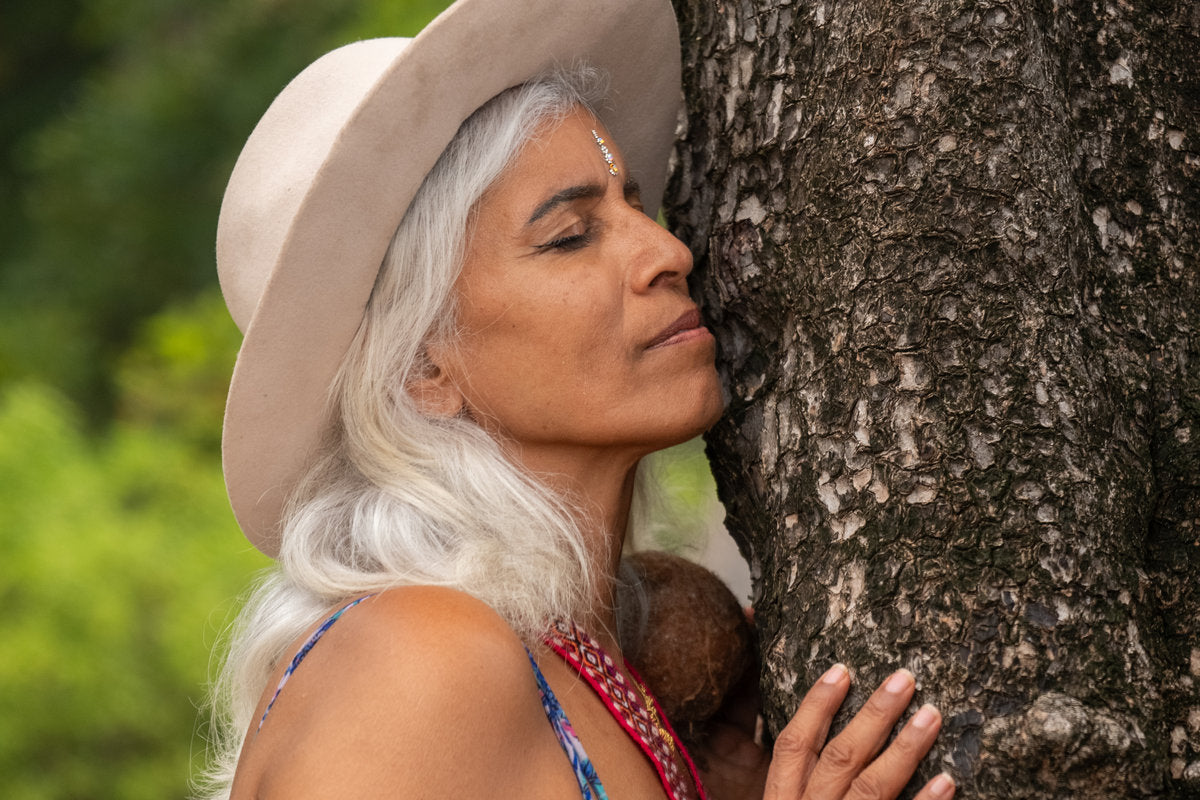
The most monumental lesson came in my early fifties. After years of caring for patients and training physicians while neglecting my own needs, I experienced debilitating adrenal fatigue. I was flat on my back. Once again, the greatest breakthrough did not come from another prescription. It came from stepping away, immersing myself in the natural environment of Costa Rica, reconnecting with the rhythms of life that humans have followed for thousands of years, and allowing my body the conditions it needed to recover.

As I integrated root-cause medicine into my practice, clear patterns began to emerge. What initially seemed like countless approaches gradually revealed themselves to be remarkably simple, timeless principles. Those discoveries became the foundation of everything I teach.

09

Today

Where it led

My journey did not lead me to a miracle cure. It led me back to the timeless principles the human body has relied on since the beginning of humanity. They were surprisingly simple, deeply rooted in nature, and available to every one of us.

Modern medicine is an extraordinary gift, but for optimal health, a wider toolbox of options is needed. Health is not something a doctor can hand you. It cannot be found solely in a prescription, a procedure, or a diagnosis.

Dr. Sangeeta Pati MD, FACOG, ABOIM

About Dr. Pati

Dr. Sangeeta Pati MD, FACOG, ABOIM

Founder, MD Prescriptives

Board-certified in obstetrics and gynecology, and certified in integrative medicine.

What she teaches

The Five Point Model

The simple, timeless principles that came out of this journey, and the foundation of everything Dr. Pati teaches.

Understand the Five Point Model →

The mission

Reclaim your power. Heal humanity.

Since the beginning, a fixed share of MD Prescriptives’ net profit has gone to one children’s home in India, including the years the company was in the red.

Adruta is not an orphanage in the way most people picture one. Children taken in there are raised the whole way: school, college tuition, and for some of them through to their wedding.

The work →

Your next step

Find your starting point.

A 2-minute assessment to see which of your five points is asking for attention first.